Credit Score FAQs

News
November 28, 2025

Your credit score plays a big role in how lenders view your home loan application — and it can influence both the interest rate you receive and the loan options available to you.

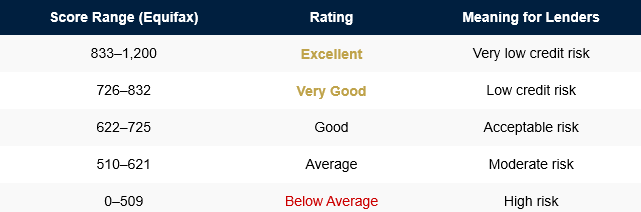
Your credit score is simply a snapshot of how you’ve managed money in the past. It’s calculated by credit reporting agencies and typically falls between 0 and 1,200 in Australia. The higher your score, the lower the risk you represent to a lender.
Credit Score FAQs

Does a pre-approval impact my credit score?
Yes — most major lenders perform a hard enquiry when you apply for formal pre-approval. Multiple hard enquiries in a short period, or a short credit history, can temporarily reduce your score.


Will banks still consider me if my score is low?
Yes — some second-tier and non-bank lenders specialise in helping borrowers with lower scores, defaults, or alternative income verification.
However, these loans often come with:
• Higher interest rates (typically +0.5 – 2% above standard)
• Lower LVR limits (often max 80%)
• Possible higher fees


How can I fix my credit score?

  1. Check what’s affecting it
  2. Correct any errors
  3. Catch up on overdue payments
  4. Lower credit utilisation
  5. Limit new credit applications
  6. Stay consistent — scores improve steadily over time


Should I use a credit repair company?
Credit repair services can help remove incorrect or unfair listings (like errors, duplicates, or lender mistakes), but they can’t erase legitimate defaults or late payments. If you suspect an error, they can be worthwhile — just do your homework before engaging one.


Whether you’re a first-home buyer or looking to refinance, understanding your credit score is a smart first step. If you’d like to review your score and see what options are available, please get in contact with us here for expert guidance and a personalised finance plan.

Any advice contained in this article is of a general nature only and does not take into account the objectives, financial situation or needs of any particular person. Therefore, before making any decision, you should consider the appropriateness of the advice with regard to those matters. Information in this article is correct as of the date of publication and is subject to change.